AI in Manufacturing: Capturing the Knowledge That Walks Out at Shift Change
How AI belongs on a plant floor - from shift handoffs and quality escapes to work instructions and CMMS - and where a supervisor still has to make the call.
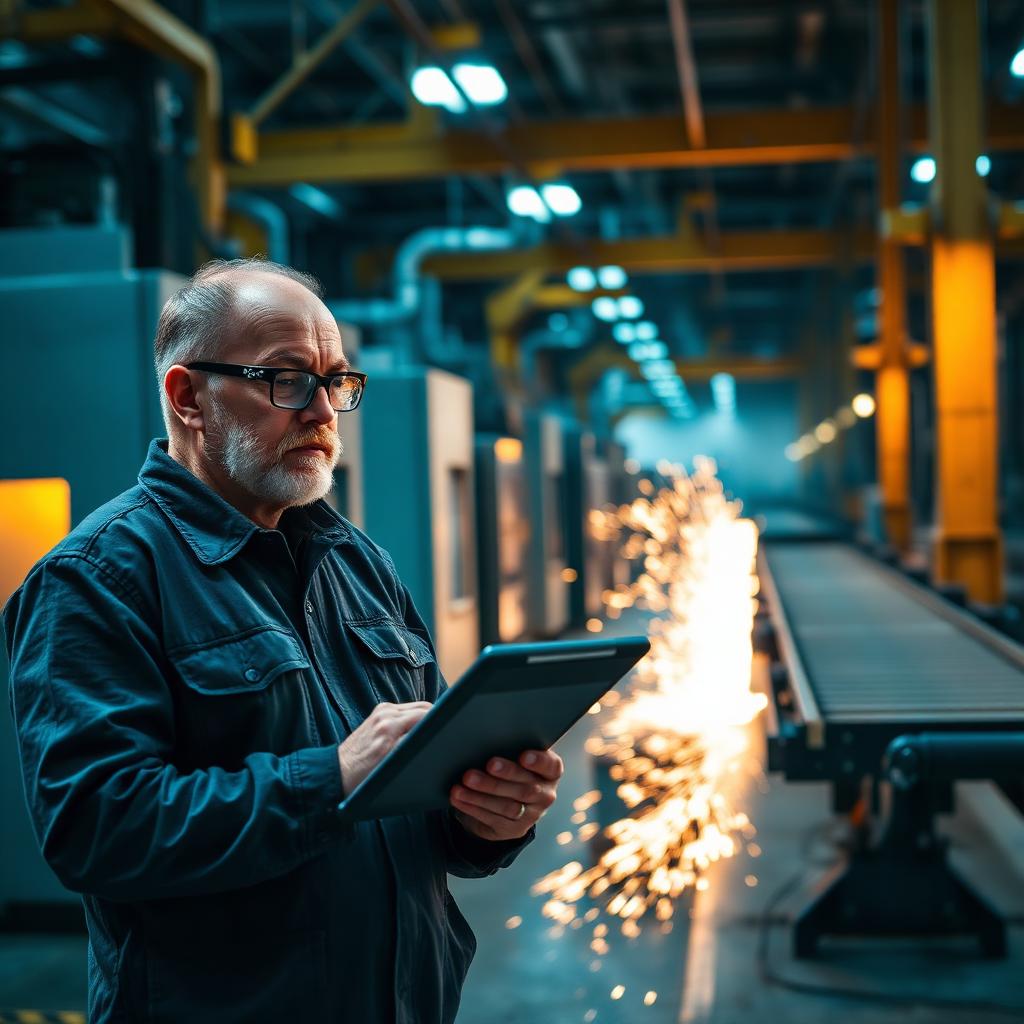
Every manufacturer we walk into has the same problem, and it is not automation. It is that the best operator on the line is 58 years old, retiring in three years, and everything he knows lives in his head. AI is not a robot on the floor - it is the tool that finally gets that knowledge out of his head and into the next shift.
The real bottleneck is knowledge transfer, not throughput
Most plants we visit are already lean. The line runs. The KPIs are on a screen somewhere. What is not solved is the invisible work - the veteran who knows the press runs hot on humid days, the QC lead who can tell a bad batch by the sound of the mixer, the maintenance tech who knows which PM is actually optional. When they leave for lunch, the plant slows down. When they retire, it stops.
That is where AI pays for itself in manufacturing - capturing tribal knowledge, standardizing it, and putting it in front of the next operator at the moment they need it.
Five places AI is already earning its keep on the floor
- 01Shift handoffs and pass-downs - Outgoing supervisor talks into a phone for 90 seconds; AI produces a formatted handoff with open issues, holds, and quality flags for the incoming shift.
- 02Work instructions and SOPs - Instead of a 40-page binder nobody reads, AI generates job-specific one-pagers pulled from the actual MES, ERP, and quality data for that part number.
- 03Quality escapes and CAPA drafting - When a nonconformance hits, AI drafts the 8D or CAPA using prior events on the same line, so the quality engineer edits instead of starts from zero.
- 04CMMS and maintenance narratives - Techs speak the work order close-out; AI cleans it up, tags it to the asset, and surfaces patterns like 'this bearing has failed on three lines in six months.'
- 05Supplier and PO email - Purchasing spends a real percentage of the week writing the same expedite email; AI drafts it in the buyer's voice with the correct PO line, expected date, and impact.
Where AI does not belong on the plant floor
We tell manufacturing clients the same thing we tell contractors: AI does not close a lockout-tagout, does not release a shipment on hold, does not sign off a first-article inspection, and does not decide to run rework. Those are human decisions with real safety, regulatory, and customer consequences. A quality engineer, a plant manager, a compliance lead - they still own those calls.
The rule holds: AI drafts, humans decide. Anything with safety, regulatory, or customer weight goes through a person before it moves.
What good adoption looks like in a plant
Good adoption on a floor does not look like a giant screen with a chatbot on it. It looks like the shift supervisor's tablet already has the pass-down half-written when they walk into the huddle. It looks like the quality engineer opening a nonconformance and seeing three prior events on the same tool with the actual fix. It looks like a maintenance tech getting a heads-up that the same bearing is running hot on two other lines, before it fails on his.
“We do not need fewer people. We need our best people to stop spending their day rewriting what they already know.”
How we approach a manufacturing engagement
We spend the first two weeks on the floor and in the office - walking the line with a supervisor, sitting with quality, riding along on a PM route, sitting in the production meeting. We are not selling MES software. We are mapping where knowledge is being lost between shifts, between departments, and between the veteran operators and everyone else. Then we pick two or three workflows that pay back fast and build them in the systems the plant already uses.
If you run a plant, a fab shop, or a multi-site manufacturing group and you are watching your best knowledge walk out the door - that is the conversation we want to have.
Want this kind of thinking applied to your company?
We embed for two weeks, map where context is being lost, and build the two or three workflows worth automating - in your tools, in your voice.